
Introduction to Developmental Intelligence and Cognitive Robotics
Modern research in cognitive science and robotics increasingly explores how human-like intelligence can emerge through developmental processes. One of the most advanced areas in this field is anthropomorphic robotics, which focuses on designing intelligent machines capable of interacting with the environment in ways similar to humans. These systems aim to perform complex cognitive functions such as learning, planning, communication, emotional interaction, social engagement, and adaptive problem-solving.
Although the concept of robots with human-like intelligence once appeared unrealistic, scientific progress suggests that developmental mechanisms may provide the foundation for creating adaptive artificial intelligence systems. Similar to how engineers discovered the principles of aerodynamics to create flying machines, researchers in developmental neuroscience and robotics are now searching for the biological principles that support human cognitive growth.
Epigenetic robotics is a major branch of this research area. It is based on the observation that biological intelligence develops gradually through long periods of immaturity, learning, sensory exploration, and interaction with the environment. According to this approach, developmental stages are not limitations but essential mechanisms required for the emergence of advanced intelligence.
Understanding these developmental mechanisms requires contributions from developmental psychology, neuroscience, artificial intelligence, and cognitive science. Researchers aim to identify the core processes that drive cognitive development and translate these mechanisms into robotic systems capable of self-organization and adaptive learning.

Principle 1: Coordination of Sensory-Motor Activity
Sensory-Motor Integration as the Foundation of Cognitive Development
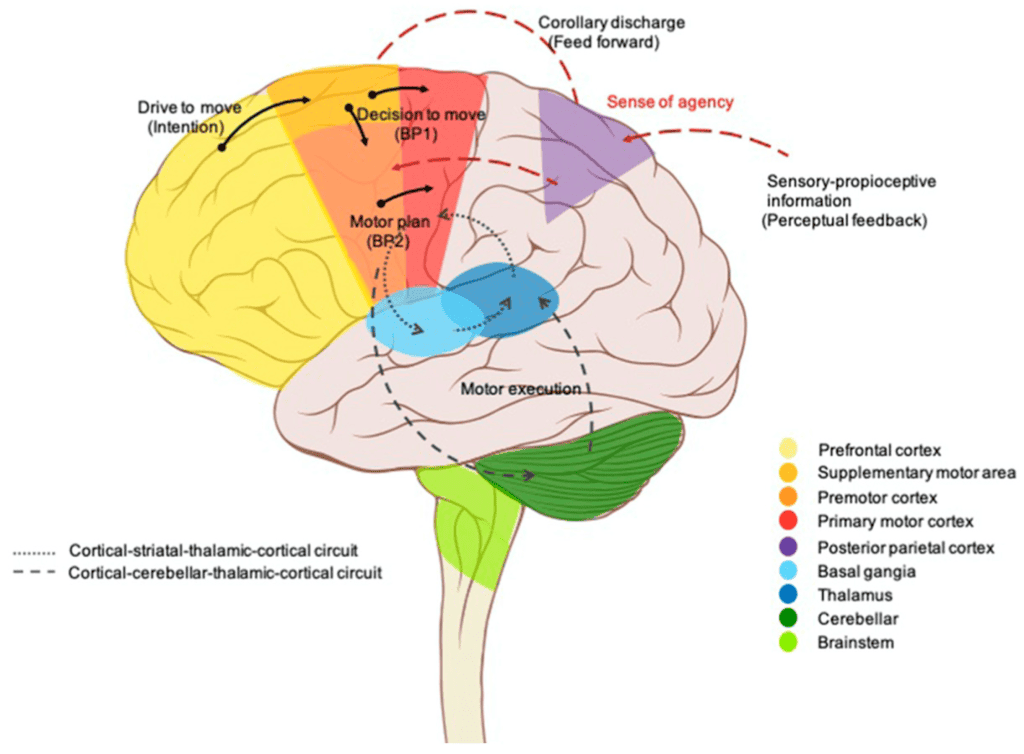
One of the most important principles of developmental intelligence is the coordination between sensory and motor systems. Early theories proposed that higher cognitive abilities emerge from the interaction between perception and action during physical tasks. Modern computational neuroscience supports this idea by demonstrating that coordinated interactions between multiple systems — including vision, touch, hearing, and movement promote self-organizing neural development.
In human infants, sensory-motor coordination plays a critical role in learning about objects, spatial relationships, and environmental structure. Research has shown that when infants coordinate visual perception with reaching and object manipulation, they develop more advanced exploratory behaviors and improved attention mechanisms.
For example, studies involving “sticky mittens” demonstrated that infants who gained early opportunities to coordinate seeing and grasping later exhibited stronger visual exploration, increased object attention, and more complex interaction patterns. These findings indicate that cognitive growth depends heavily on active physical engagement with the environment.
Action Influences Visual Perception and Object Recognition
Research in developmental psychology has also revealed that motor activity directly influences visual object recognition and categorization. Young children who physically manipulate objects develop different perceptions of shape, symmetry, and spatial orientation compared to children who only observe objects passively.
Experimental evidence showed that children moving objects vertically later categorized them according to vertical structure, whereas children manipulating objects horizontally categorized them according to horizontal structure. Similarly, specific hand movements altered how children perceived symmetry in object structures.
These findings suggest that cognitive representations of object properties are not generated by vision alone. Instead, they emerge through coordinated sensory-motor experiences involving movement, touch, proprioception, and visual feedback.
Neural Mapping and Self-Organizing Cognitive Systems
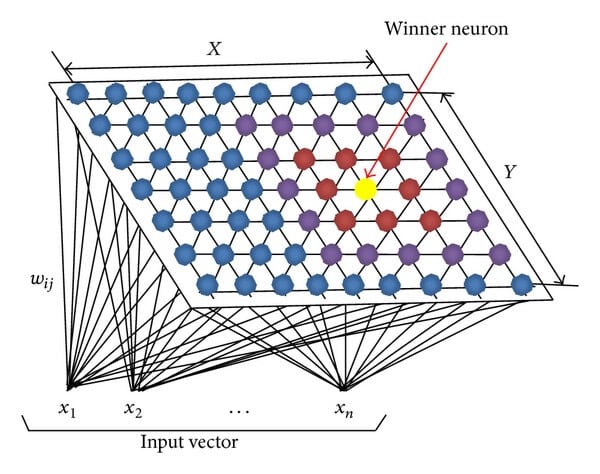
Theoretical models of neural development propose that repeated coordination between sensory systems creates interconnected neural maps linking visual, motor, tactile, and proprioceptive information. As infants manipulate objects, each sensory system processes different aspects of the same physical reality.
Because these systems continuously exchange information, the brain gradually extracts higher-order patterns and structural regularities that cannot be identified by any single sensory system independently. This self-organizing process contributes to the development of perception, memory, categorization, and problem-solving abilities.
Sensory-Motor Learning in Epigenetic Robotics
Development of Mirror Systems in Robots
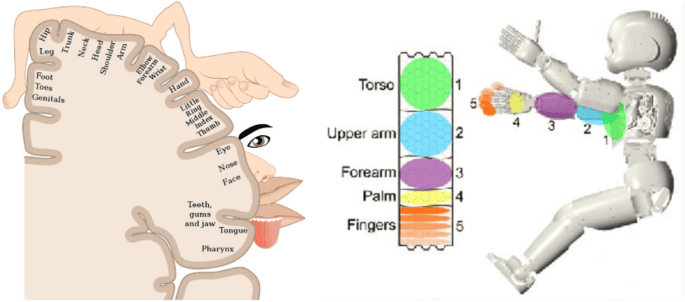
Epigenetic robotics applies these developmental principles to artificial intelligence systems. Researchers have designed robots capable of learning body representations and social interactions through coordinated sensory-motor experiences.
One important achievement involves the development of robotic mirror systems. In these experiments, robots perform spontaneous facial movements while observing human responses. Human participants naturally imitate the robot’s facial expressions, allowing the robot to associate its own motor actions with observed human movements.
Through repeated interactions, the robot learns relationships between visual perception and motor control, gradually developing an internal representation linking the movements of others with its own actions. This process resembles the development of mirror neurons in biological systems and demonstrates how social interaction supports cognitive learning.
Principle 2: Social Coupling and Interaction with Intelligent Others
Social Interaction as a Driver of Cognitive Development
Human intelligence develops within a highly social environment. Cognitive growth depends not only on individual sensory experiences but also on continuous interaction with other individuals who possess similar bodies, behaviors, and mental states.
Socially embedded development creates powerful learning opportunities because observable human behaviors provide information about internal emotions, intentions, motivations, and goals. Through repeated interactions, infants learn to associate facial expressions, gestures, voice patterns, and body movements with emotional and cognitive states.
This process creates networks of learnable correlations between:
- One’s own behaviors and emotional states
- The behaviors of others and their intentions
- Social actions and environmental outcomes
- Internal cognitive states and external communication signals
These coordinated interactions support the emergence of empathy, emotional recognition, communication, and social intelligence.
Emotional Learning and Artificial Empathy in Robots
Robotic systems have been developed to simulate these developmental processes. Some robots use facial imitation and emotional feedback mechanisms to learn emotional associations.
When a robot imitates a human facial expression, internal affective systems generate emotional responses corresponding to the observed expression. This allows the robot to associate specific visual patterns with internal emotional states.
Over time, these interactions enable robots to recognize emotional signals, interpret social behaviors, and respond adaptively during human communication. This artificial empathy system demonstrates how emotional intelligence may emerge through repeated sensory-motor and social coordination.
Principle 3: Overlapping Coordinations and Progressive Cognitive Development
Cognitive Growth Through Multiple Interconnected Tasks
Biological development does not occur through isolated learning events. Instead, intelligence emerges through overlapping developmental processes involving many interconnected tasks and systems.
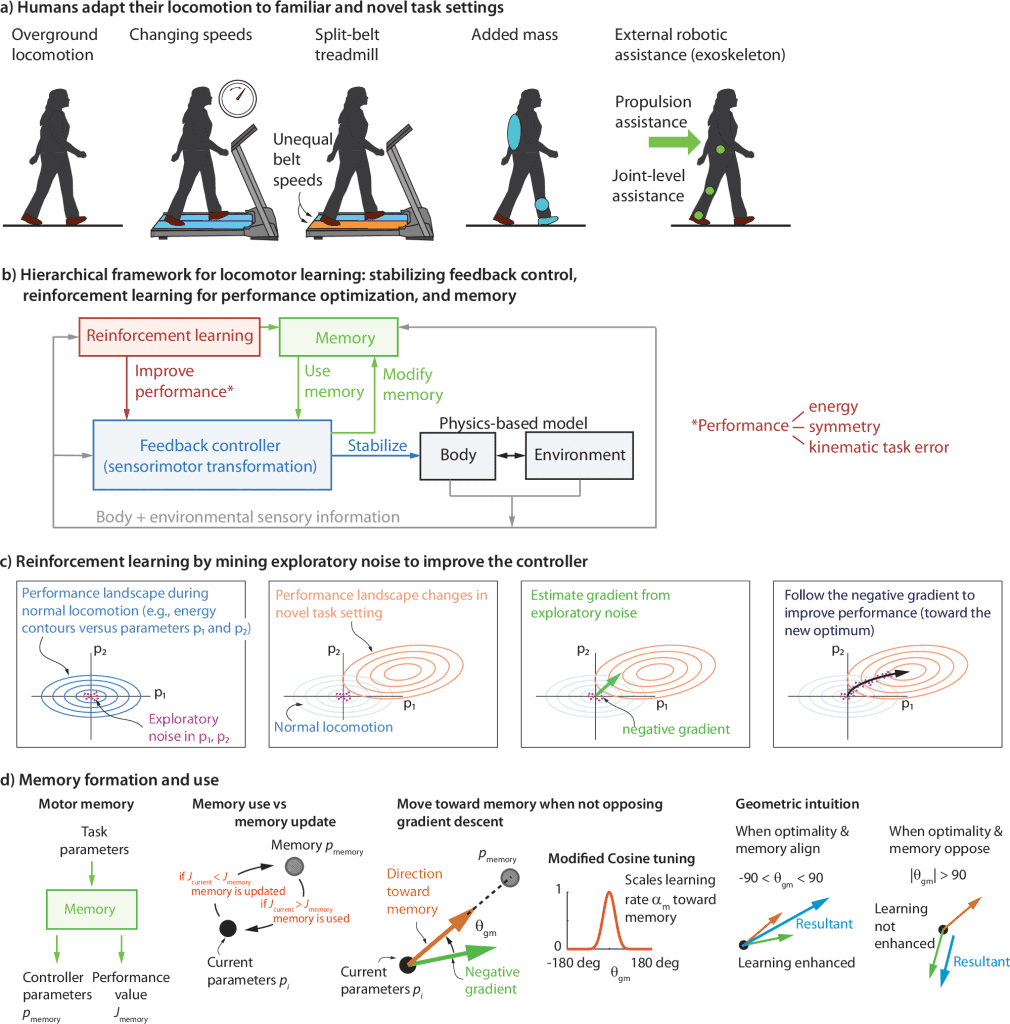
Each developmental achievement modifies neural organization and influences future learning. As sensory systems mature and interact, they create cascading developmental effects that shape perception, attention, memory, and decision-making.
Research has shown that altering the natural developmental sequence of sensory systems can dramatically affect neural and behavioral outcomes. For example, disruptions in hearing or visual coordination during early childhood may alter attention mechanisms and sensory processing abilities.
Self-Locomotion and Cognitive Flexibility
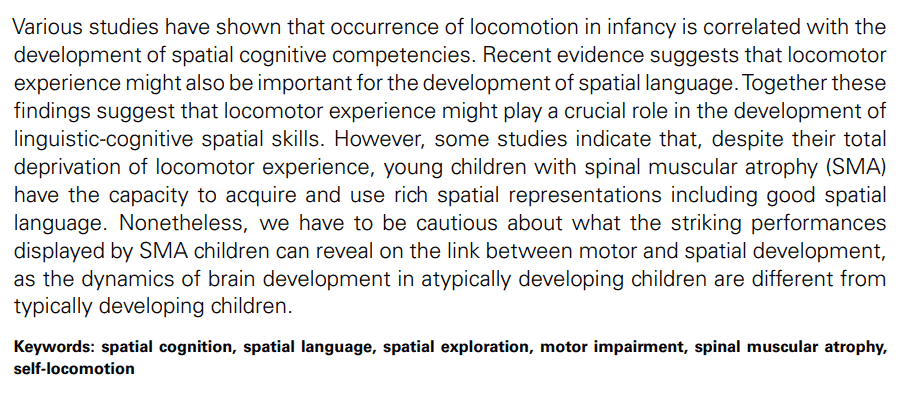
One important example involves infant self-locomotion. Studies demonstrated that infants with greater crawling and walking experience show improved performance in object permanence and spatial memory tasks.
Researchers discovered that giving infants early mobility experiences accelerated cognitive flexibility and reduced repetitive errors during problem-solving tasks. These findings suggest that physical movement contributes to the organization of spatial memory, attention, and sequential action planning.
The developmental impact of locomotion illustrates how cognitive systems evolve through continuous interaction between motor behavior and environmental feedback.
Emergence of Social Referencing in Developmental Robotics
Joint Attention and Emotional Guidance
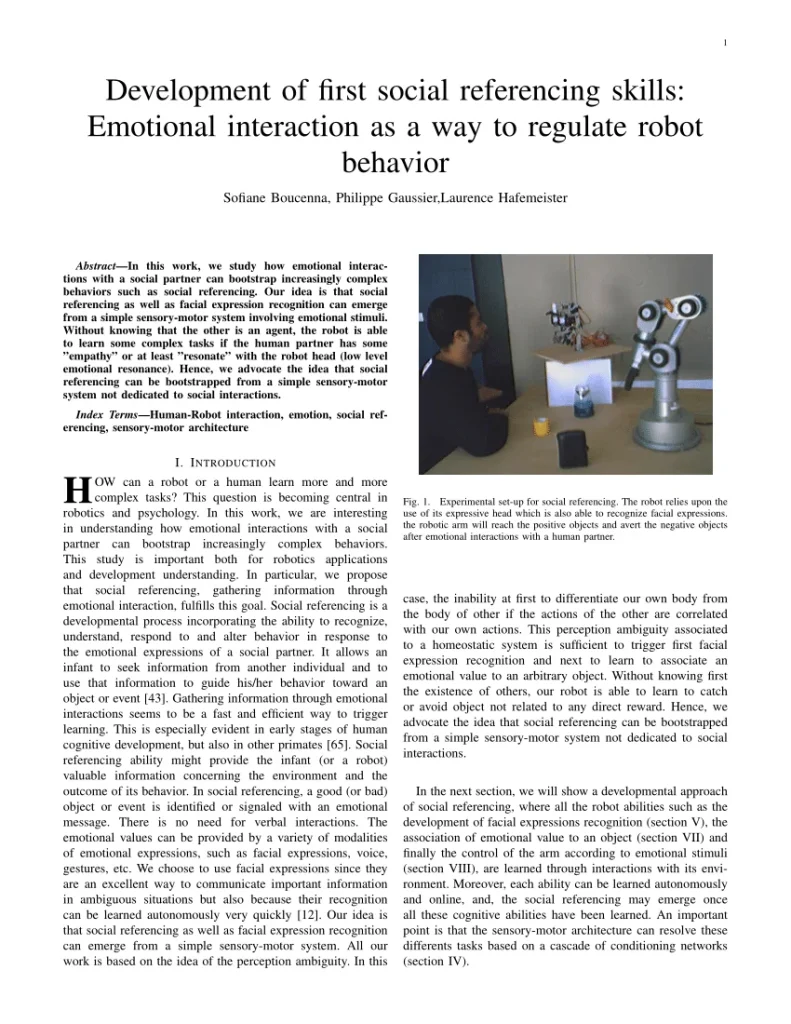
Advanced robotic systems have also been designed to model social referencing, a process in which infants use emotional signals from caregivers to evaluate unfamiliar objects or situations.
These robotic systems integrate several developmental components:
- Emotional recognition
- Facial expression analysis
- Gaze tracking
- Joint attention mechanisms
- Associative memory systems
When confronted with unfamiliar objects, robots generate mild anxiety responses and seek social cues from human partners. By observing human facial expressions and attentional focus, robots learn whether objects should be interpreted as safe, dangerous, positive, or negative.
This developmental process demonstrates how complex social cognition emerges gradually from multiple interacting systems rather than from isolated programmed behaviors.
Developmental Processes as the Foundation of Human-Like Intelligence
Why Development Matters in Artificial Intelligence
Human intelligence represents one of the most complex biological achievements. Evolution selected developmental processes as the mechanism through which intelligence emerges, adapts, and becomes flexible.
Research in developmental psychology and epigenetic robotics suggests that intelligent behavior depends on several interconnected principles:
- Coordination between sensory and motor systems
- Social interaction with similar cognitive agents
- Progressive integration of overlapping developmental tasks
- Self-organization through environmental interaction
- Continuous adaptation through feedback mechanisms
Rather than being pre-programmed, advanced cognitive abilities appear to emerge dynamically from repeated interactions between the brain, body, environment, and social world.
Conclusion
The study of developmental processes provides critical insights into the origins of human cognition and the future of artificial intelligence. Research in epigenetic robotics demonstrates that intelligence may arise through gradual sensory-motor coordination, social interaction, emotional learning, and overlapping developmental experiences.
These developmental principles offer a biologically inspired framework for designing adaptive robotic systems capable of learning, communication, emotional interaction, and flexible problem-solving. As neuroscience, developmental psychology, and robotics continue to converge, developmental intelligence may become one of the most important foundations for the next generation of human-centered artificial intelligence technologies.