
Introduction to Antibodies and the Adaptive Immune Response
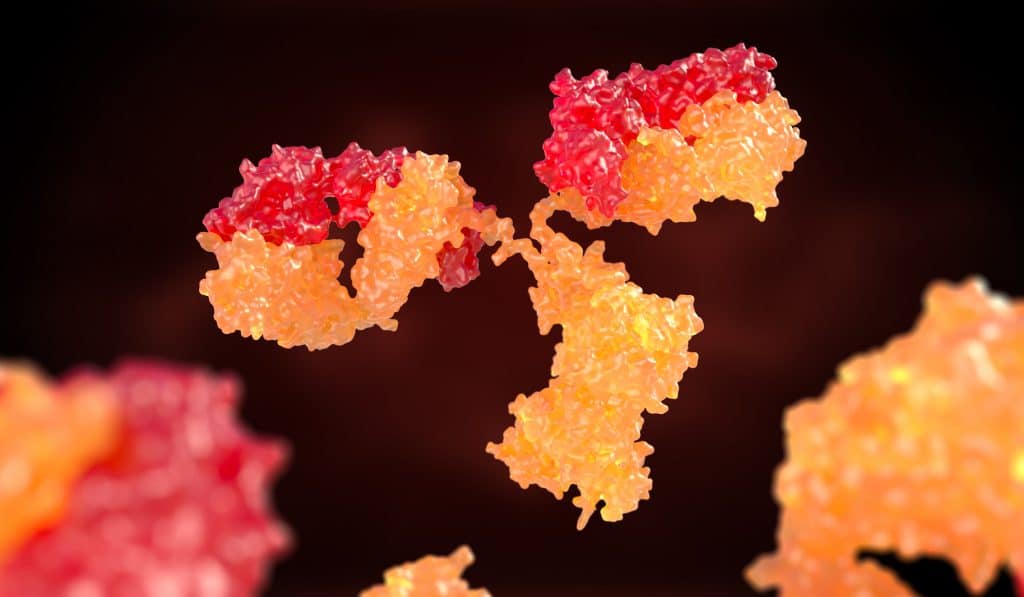
Antibodies are specialized glycoproteins produced by activated B lymphocytes and plasma cells as part of the adaptive immune system. These immune proteins circulate in blood plasma, extracellular fluids, and mucosal secretions where they identify, bind, neutralize, and help eliminate foreign molecules such as viruses, bacteria, toxins, allergens, and abnormal cellular proteins. Because of their exceptional antigen-binding specificity and affinity, antibodies have become essential tools in modern biotechnology, immunology, molecular biology, diagnostics, pharmaceutical development, and therapeutic medicine.
The remarkable ability of antibodies to recognize precise molecular targets has transformed scientific research and clinical practice. Today, antibodies are extensively used in diagnostic assays, biomarker detection, immunotherapy, vaccine development, infectious disease monitoring, cancer treatment, autoimmune disease management, cell sorting technologies, and advanced proteomic analysis. Their broad utility has made antibodies among the most important biological reagents in biomedical science.
Antibodies are generally classified into two major categories based on their origin and production method:
- Polyclonal antibodies (PAbs)
- Monoclonal antibodies (MAbs)
Although both types recognize antigens, they differ significantly in specificity, homogeneity, production techniques, reproducibility, sensitivity, affinity characteristics, and clinical applications. Understanding the differences between monoclonal and polyclonal antibodies is essential for selecting the appropriate reagent for research, diagnostics, therapeutic development, and laboratory assays.
Antibody Structure and Molecular Organization
Antibodies, also known as immunoglobulins (Ig), are complex Y-shaped glycoproteins composed of four polypeptide chains:
- Two identical heavy chains
- Two identical light chains
These chains are linked together by disulfide bonds and noncovalent interactions, forming a highly stable molecular structure with an approximate molecular weight of 150 kDa.
Major Immunoglobulin Classes
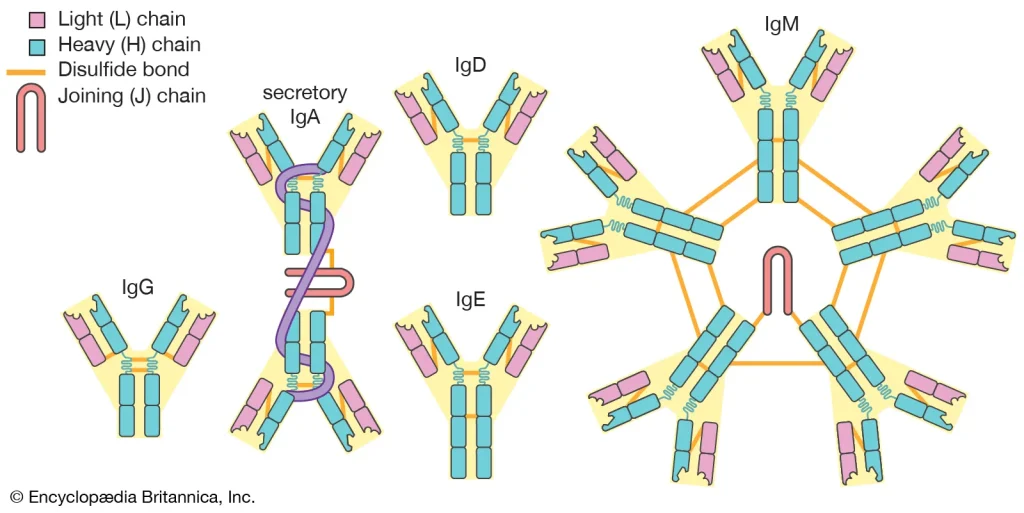
In mammals, antibodies are divided into five major immunoglobulin classes:
- IgG
- IgM
- IgA
- IgD
- IgE
Each immunoglobulin class performs distinct immune functions and contributes differently to humoral immunity, inflammatory responses, complement activation, and pathogen neutralization.
Biological Roles of Immunoglobulin Classes
| Immunoglobulin | Main Function |
|---|---|
| IgG | Long-term immunity and secondary immune response |
| IgM | Primary immune response and complement activation |
| IgA | Mucosal immunity and secretion protection |
| IgD | B-cell receptor activity |
| IgE | Allergic responses and parasite defense |
Some immunoglobulin classes are further subdivided into subclasses or isotypes due to structural variations within conserved heavy chain regions.
Fab and Fc Regions of Antibodies
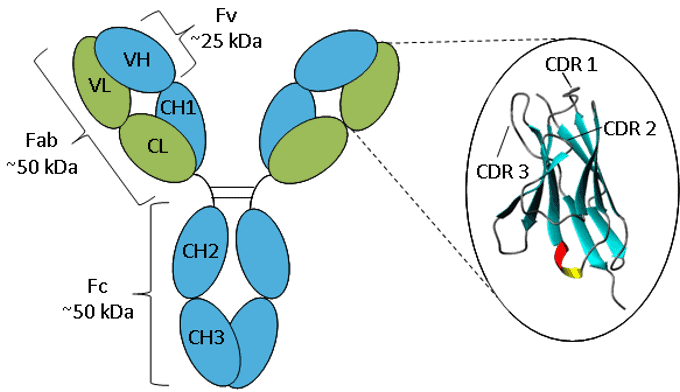
The antibody molecule contains two major functional domains:
Fab Region (Fragment Antigen Binding)
The two arms of the Y-shaped structure are called Fab fragments. These regions contain antigen-binding sites responsible for recognizing specific epitopes on antigens.
Each Fab region includes:
- Variable heavy chain domains
- Variable light chain domains
- Complementarity-determining regions (CDRs)
The Fab domain determines antibody specificity and affinity.
Fc Region (Fragment Crystallizable)
The Fc region forms the stem of the antibody structure and mediates biological effector functions such as:
- Complement activation
- Opsonization
- Antibody-dependent cellular cytotoxicity (ADCC)
- Phagocytosis
- Natural killer cell activation
The Fc region also influences antibody half-life, immune signaling, and therapeutic efficacy.
Complementarity-Determining Regions (CDRs)
The antigen-binding specificity of antibodies is controlled by hypervariable regions called complementarity-determining regions (CDRs). These small amino acid loops create a highly selective binding surface capable of recognizing unique antigenic epitopes.
The diversity of antibody recognition is generated through several mechanisms:
- V(D)J genetic recombination
- Somatic hypermutation
- Heavy and light chain pairing
- Junctional diversity
These mechanisms allow mammals to generate an enormous antibody repertoire estimated at more than,distinct antigen-binding specificities.
This extraordinary diversity enables the immune system to recognize virtually unlimited pathogens and molecular structures.
Antigen-Antibody Interactions
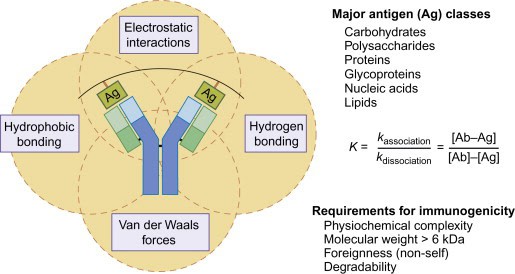
Antibodies bind specifically to epitopes located on proteins, carbohydrates, nucleic acids, toxins, or other biological molecules. Antigen-antibody interactions depend on several molecular properties:
- Structural complementarity
- Electrostatic interactions
- Hydrogen bonding
- Hydrophobic interactions
- Van der Waals forces
Antibody Affinity
Affinity refers to the strength of binding between a single antigenic epitope and one antibody-binding site.
High-affinity antibodies:
- Bind targets more efficiently
- Improve assay sensitivity
- Enhance detection accuracy
- Increase therapeutic performance
Antibody Avidity
Avidity represents the overall strength of multivalent interactions between antibodies and antigens.
For example:
- IgG is bivalent
- IgM is decavalent
Because IgM possesses multiple binding sites, it exhibits very high avidity despite sometimes having lower individual binding affinity.
Monoclonal Antibodies (MAbs)
Monoclonal antibodies are homogeneous antibodies produced from a single B-cell clone. All antibody molecules generated are structurally identical and recognize the same epitope.
Development of Monoclonal Antibody Technology
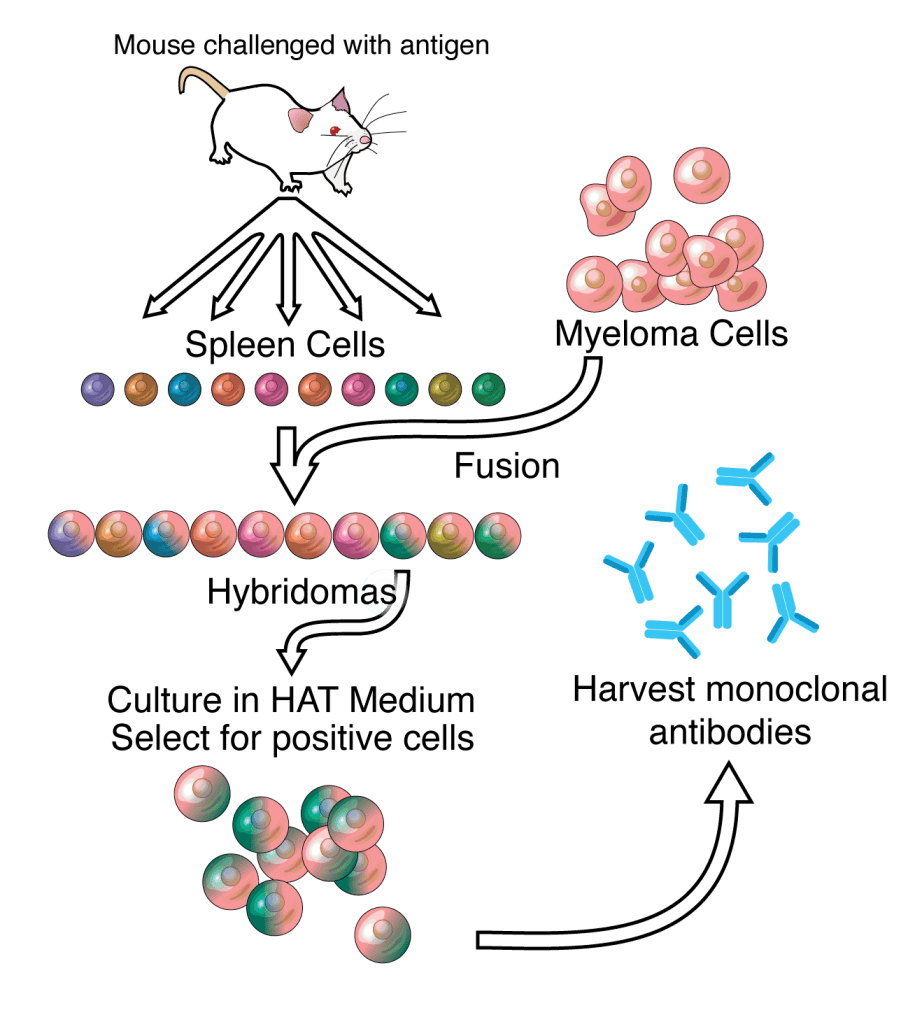
Modern monoclonal antibody technology was pioneered by Georges Köhler and César Milstein in 1975 using hybridoma technology.
This method involves:
- Immunizing an animal with a target antigen
- Isolating antibody-producing splenic B cells
- Fusing B cells with immortal myeloma cells
- Creating hybridomas capable of continuous antibody production
Each hybridoma produces one highly specific monoclonal antibody.
Advantages of Monoclonal Antibodies
High Specificity
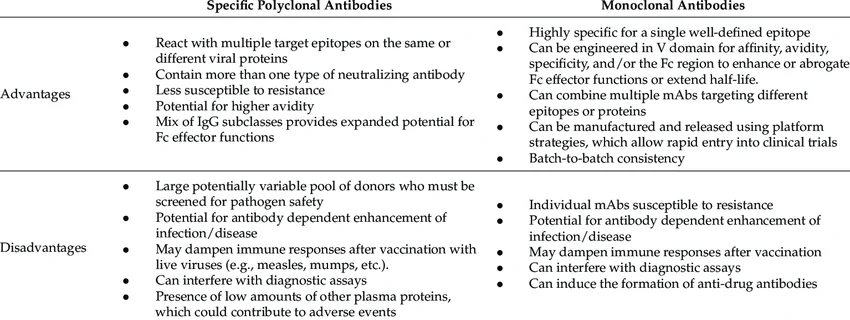
Monoclonal antibodies recognize a single epitope with exceptional precision, minimizing background noise and cross-reactivity.
Excellent Reproducibility
Because monoclonal antibodies originate from one clone, batch-to-batch consistency remains extremely stable.
Unlimited Production Capacity
Hybridoma cell lines can continuously produce identical antibodies for years.
Superior Analytical Precision
Monoclonal antibodies are highly effective for:
- Protein conformation studies
- Phosphorylation analysis
- Receptor targeting
- Cancer biomarker detection
- Precision diagnostics
Limitations of Monoclonal Antibodies
Despite their advantages, monoclonal antibodies also present several challenges.
Sensitivity to Structural Changes
Minor antigen modifications such as:
- Denaturation
- Glycosylation
- Mutation
- pH variation
- Protein folding changes
may significantly reduce monoclonal antibody binding.
Higher Production Cost
Generating monoclonal antibodies requires:
- Specialized laboratory infrastructure
- Hybridoma screening
- Cell culture systems
- Long development timelines
Reduced Recognition Breadth
Because monoclonal antibodies target only one epitope, they may fail when the epitope becomes masked or structurally altered.
Polyclonal Antibodies (PAbs)
Polyclonal antibodies are heterogeneous mixtures of antibodies produced by multiple B-cell clones in response to an antigen.
Unlike monoclonal antibodies, polyclonal antibodies recognize multiple epitopes simultaneously.
Advantages of Polyclonal Antibodies
High Sensitivity
Recognition of multiple epitopes increases signal amplification and improves antigen detection.
Better Tolerance to Antigen Changes
Polyclonal antibodies maintain activity even if some epitopes become denatured or modified.
Faster Production
PAbs can often be generated within several months using standard animal immunization protocols.
Lower Production Costs
Compared with monoclonal antibodies, polyclonal antibody production is simpler and more economical.
Limitations of Polyclonal Antibodies
Batch Variability
Different animals produce different immune responses, leading to variability between antibody batches.
Limited Supply
Production depends on animal lifespan and serum collection capacity.
Higher Background Reactivity
Because PAbs recognize multiple epitopes, nonspecific binding and cross-reactivity may increase.
Differences Between Monoclonal and Polyclonal Antibodies
| Feature | Monoclonal Antibodies | Polyclonal Antibodies |
|---|---|---|
| Origin | Single B-cell clone | Multiple B-cell clones |
| Epitope Recognition | Single epitope | Multiple epitopes |
| Specificity | Very high | Moderate to high |
| Sensitivity | Moderate | High |
| Reproducibility | Excellent | Variable |
| Production Cost | High | Lower |
| Production Time | Long | Short |
| Batch Consistency | Stable | Variable |
| Cross-Reactivity | Low | Higher |
| Supply | Unlimited | Limited |
Antibody Applications in Research and Biotechnology
Antibodies are fundamental tools in molecular diagnostics, proteomics, immunology, biotechnology, and pharmaceutical research.
Western Blotting
Western blotting uses antibodies to detect specific proteins following electrophoretic separation.
Applications include:
- Protein expression analysis
- Disease biomarker detection
- Molecular weight determination
- Signaling pathway analysis
ELISA Technology
The enzyme-linked immunosorbent assay (ELISA) is widely used for quantitative antigen or antibody detection.
ELISA applications include:
- Infectious disease diagnosis
- Hormone quantification
- Cytokine analysis
- Vaccine monitoring
- Autoimmune disease screening
Flow Cytometry and Cell Sorting
Fluorophore-conjugated antibodies are extensively used in flow cytometry for:
- Immune cell phenotyping
- Stem cell analysis
- Leukemia diagnosis
- Cell population sorting
- Biomarker profiling
Technologies such as:
- FACS (Fluorescence-Activated Cell Sorting)
- MACS (Magnetic-Activated Cell Sorting)
depend heavily on antibody specificity.
Immunohistochemistry and Immunofluorescence
Antibodies are critical for tissue imaging and cellular localization studies.
These methods allow researchers to:
- Detect protein expression in tissues
- Visualize cellular structures
- Identify tumor markers
- Study pathological changes
Polyclonal antibodies are often preferred in immunohistochemistry because they recognize multiple epitopes and tolerate fixation-induced conformational changes.
Therapeutic Applications of Monoclonal Antibodies
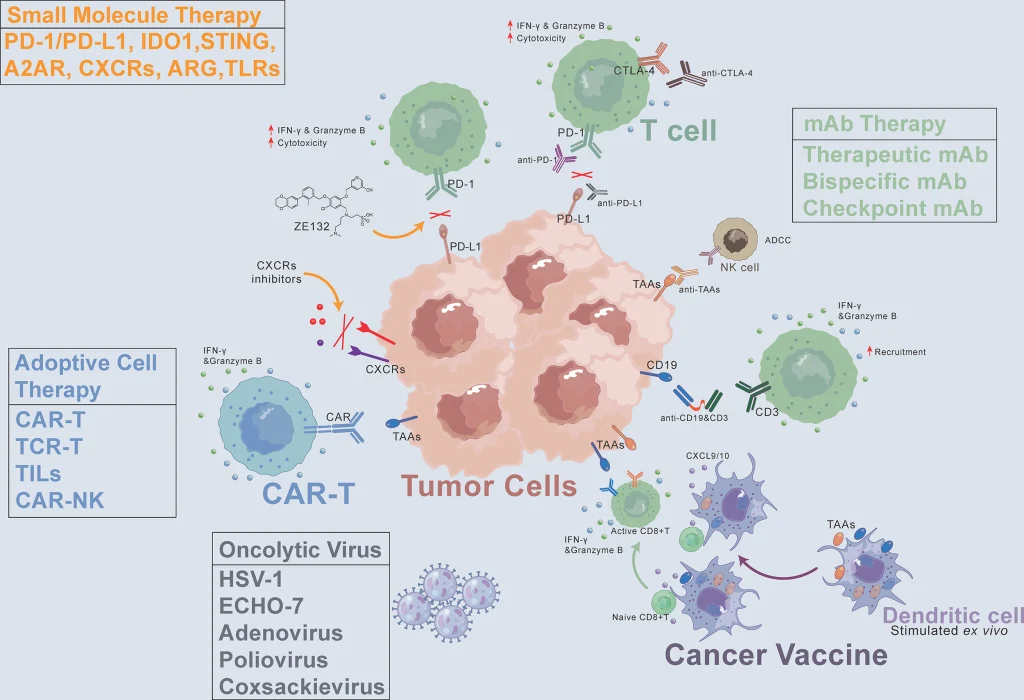
Therapeutic monoclonal antibodies have revolutionized modern medicine.
Cancer Immunotherapy
Monoclonal antibodies can selectively target cancer-associated antigens.
Examples include:
- Rituximab
- Trastuzumab
- Infliximab
These biologic agents mediate:
- ADCC
- Complement activation
- Receptor blockade
- Signal inhibition
- Tumor growth suppression
Radioimmunotherapy and Targeted Drug Delivery
Antibodies can deliver therapeutic payloads directly to diseased tissues.
Applications include:
- Radioimmunotherapy
- Antibody-drug conjugates
- Immunotoxins
- Targeted enzyme delivery
This targeted approach minimizes systemic toxicity and improves therapeutic selectivity.

Intrabodies and Recombinant Antibody Engineering
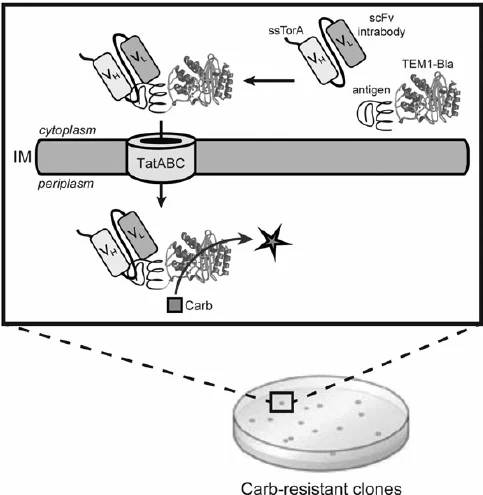
Advanced genetic engineering has enabled development of:
- Single-chain variable fragments (scFv)
- Humanized antibodies
- Recombinant antibodies
- Intrabodies
These engineered antibodies support:
- Intracellular targeting
- Functional protein inhibition
- Precision molecular therapy
- Gene-based immunotherapy
Selection of Animal Species for Antibody Production
Several animal species are commonly used for antibody generation.
Rabbits
Widely used for polyclonal antibody production due to:
- Strong immune responses
- Easy handling
- Cost efficiency
Goats and Sheep
Useful for large-scale serum production.
Mice
Primary species for monoclonal antibody production.
Chickens
Chicken IgY antibodies offer several advantages:
- High phylogenetic divergence
- Large antibody yield from egg yolk
- Reduced mammalian cross-reactivity
Importance of Antibody Specificity and Cross-Reactivity
Antibody specificity is critical for reliable experimental and clinical results.
Cross-reactivity may occur when antibodies bind structurally similar epitopes on unrelated molecules. While useful in comparative biological studies, excessive cross-reactivity can generate:
- False-positive diagnostic results
- Background staining
- Reduced assay accuracy
Proper antibody validation is therefore essential in biomedical research and clinical diagnostics.
Future Perspectives of Antibody Technology
Antibody engineering continues to evolve rapidly through advances in:
- Recombinant DNA technology
- Humanized antibody platforms
- Phage display systems
- Nanobody engineering
- Artificial intelligence-driven antibody discovery
- Personalized immunotherapy
Emerging antibody-based technologies are expected to play a major role in:
- Precision oncology
- Autoimmune disease treatment
- Infectious disease control
- Biomarker discovery
- Regenerative medicine
- Nanomedicine
- Targeted molecular imaging
Conclusion
Monoclonal and polyclonal antibodies are among the most powerful tools in modern biomedical science, biotechnology, diagnostics, and therapeutic medicine. Their unique ability to bind specific antigens with high affinity and selectivity has enabled major advances in molecular biology, immunology, cancer therapy, infectious disease diagnostics, and pharmaceutical research.
Monoclonal antibodies provide exceptional specificity, reproducibility, and unlimited production potential, making them ideal for precision diagnostics and targeted therapeutics. In contrast, polyclonal antibodies offer broader epitope recognition, enhanced sensitivity, and greater tolerance to antigen conformational changes, making them highly valuable in many laboratory applications.
The choice between monoclonal and polyclonal antibodies depends on multiple factors including assay requirements, antigen characteristics, sensitivity needs, production costs, and long-term reproducibility. As antibody engineering technologies continue to advance, antibody-based diagnostics and therapeutics will remain central to the future of precision medicine, immunotherapy, translational research, and advanced biomedical innovation.